
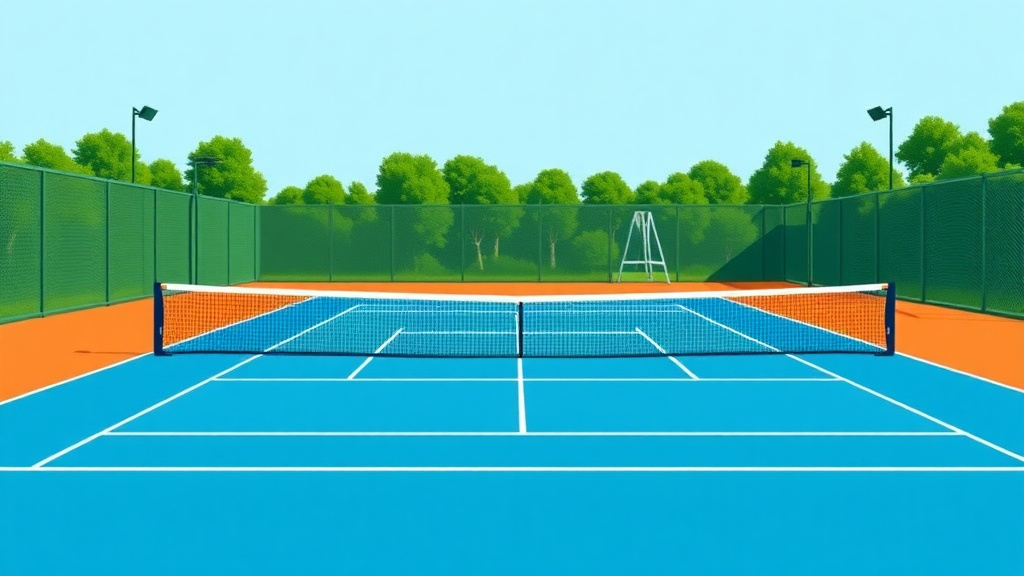
Whether you’re a part-time competitor or a competitive athlete, the surface beneath your feet can significantly impact your game. From the lightning-fast hard courts to the resilient clay courts and the grass of prestigious championships, each court type demands different strategies and skills. Knowing the way these court types influence your footwork, shot selection, and total game is essential to enhance your game. This article examines the key playing surfaces, their unique characteristics, and useful strategies for adapting your play to improve your performance on different surfaces.
Hard Courts: Speed and Consistency
Hard courts comprise the primary tennis surface worldwide, located at recreational clubs, professional tournaments, and training facilities. Made with acrylic or polyurethane layers atop concrete or asphalt bases, these courts provide a rapid, reliable playing surface. The uniform rebound and rapid surface tempo reward attacking ground-stroke tactics and powerful shots. Hard courts demand excellent footwork and explosive movement, as the unforgiving surface allows minimal cushioning. Players must develop strong legs and core stability to manage the constant pounding of rallies.
The performance characteristics of hard courts substantially impact strategic choices during matches. Fast shot speed means reduced time to react for opponents, making serve-and-volley tactics and aggressive net play especially successful. The reliable, uniform bounce allows players to time their shots with greater accuracy compared to clay surfaces. However, the hard surface’s lack of friction can make sliding difficult, requiring players to rely on quick directional changes rather than traditional slide techniques. Consistency becomes paramount, as mistakes are penalized more severely on these courts.
Key Benefits for Various Play Styles
- Power players benefit from the quick court that amplifies their shot velocity and reduces opponents’ response time
- Serve specialists gain an advantage, as hard surfaces favor big serves with fast, consistent bounces
- Baseline grinders value the consistency that enables accurate shots and extended rallies
- Serve-and-volley players thrive on the surface’s pace, enabling quick approaches and effective finishing shots at the net
Tailoring Your Playing Style to Hard Court Surfaces
Strong performance on hard courts necessitates modifying footwork mechanics and shot choices from other surfaces. Prioritize explosive footwork and rapid side-to-side movement, as the court’s demanding surface requires accurate court positioning. Add increased serve-and-volley play and net approaches, taking advantage of the fast surface to shorten rallies. Work on developing a reliable first serve, as the consistent bounce rewards accuracy and power. Furthermore, build your leg strength through specific conditioning to endure the physical demands and minimize injury potential from the high-impact court.
Mental preparation is equally crucial when competing on hard courts. The faster speed of the game requires heightened concentration and rapid decision-making. Practice staying calm during high-speed exchanges and build tactics for breaking momentum during opponent streaks. Work on transition shots that allow you to move from defense to offense rapidly. Finally, invest in proper court shoes with superior lateral stability and shock absorption to protect your joints while improving your ability to move explosively across the court.
Clay Courts: Technique and Endurance
The Characteristics of Clay Playing Surfaces
Clay playing surfaces, predominantly used in professional tournaments like the French Open, offer a distinctly different playing experience compared to hard courts. The loose surface composition produces a softer, gentler playing environment that significantly reduces impact on joints and muscles. This cushioning effect makes clay courts ideal for players aiming to reduce injury risk while developing their technical skills. The surface’s natural friction also encourages longer rallies, as the ball slows down more quickly upon contact. Players must adapt to the distinctive bounce patterns and bounce patterns that clay surfaces create.
The maintenance and composition of clay courts require regular care to maintain ideal court conditions. Regular watering, rolling, and grooming maintain the surface at the proper density and moisture level. Different clay types—including red European clay, green American clay, and artificial clay options—each provide slightly different playing characteristics. Understanding these distinctions enables players train properly for specific tournaments. The reduced speed of clay courts significantly alters how players approach the game compared to faster surfaces.
Developing Your Technique on Clay
Success on clay courts calls for advanced footwork and positional skills that vary considerably from hard court play. The sliding motion is vital, allowing players to maintain balance while moving transversely down the baseline. Cultivating powerful lateral agility and recovery skills stops players from being pulled too wide during prolonged exchanges. Appropriate weight placement and pivoting mechanics enable smooth directional shifts on the slippery surface. Players must practice specific footwork drills to build muscle memory for clay-court techniques and sustain steadiness during aggressive shot-making.
Shot selection on clay courts requires careful planning and tactical awareness rather than forceful attacking play. Topspin grows more important, as it helps control the ball’s path and bounce on the slower surface. Players should build consistent groundstrokes with significant topspin to keep opponents deep in the court. Approach shots require careful preparation, as hurrying to the net on clay exposes players to passing attempts. Mastering these technical elements creates a solid foundation for competitive clay court performance.
Developing Endurance for Prolonged Clay Court Exchanges
Clay courts are famous for generating extended physically taxing rallies that test players’ heart and lung endurance and mental toughness. The slower ball speed and cushioned playing area facilitate extended rallies, requiring superior conditioning and mental discipline. Players must create specialized workout plans that target the musculature required for clay court motion mechanics, such as better lateral control and powerful movement recovery. Interval training combined with baseline rally practice strengthens the oxygen utilization and power output required for clay court success. Mental fortitude proves just as crucial when dealing with demanding contests that can go considerably past three hours.
Training for clay court tournaments should incorporate specialized work on clay surfaces when you can to enhance tournament-level stamina. Practicing extended rally simulations helps players grasp pacing and energy management throughout matches. Recovery methods become essential when participating in multiple clay events in succession, as the constant sliding movements create substantial muscle tiredness. Proper nutrition, hydration, and recovery routines support consistent play during the challenging clay court schedule. Players who master the technical and psychological challenges of clay courts achieve a substantial performance benefit throughout the season.
Grass Courts: Accuracy and Intensity
Grass courts embody the apex of tennis tradition, most famously featured at Wimbledon. These quick-court playing surfaces demand aggressive tactics and precise shot placement. The ball skids through quickly with minimal bounce, compelling players to take initiative at the net position and finish points rapidly. Grass favors serve-and-volley strategies and aggressive baseline play, benefiting players who take advantage of limited setup time and attack opportunities.
Adapting your game to grass courts requires psychological preparation and tactical refinement. Build a strong serve-and-volley game, as long baseline exchanges rarely occur on this surface. Work on your approach shots and volleys extensively to control at the net. Enhance your footwork and anticipatory ability, as the fast-moving ball demands quicker responses. Reliable slice strokes become essential for managing the low-bouncing ball and generating opportunities for offensive shots.
Important Performance Elements on Grass
- Attacking net approach and serve-and-volley strategies are vital
- Precise serve placement grows important due to limited reaction time
- Low ball bounce requires adjusted groundstroke technique and court positioning
- Quick footwork and anticipation abilities determine success
- Slice shots provide better control than heavy topspin
