
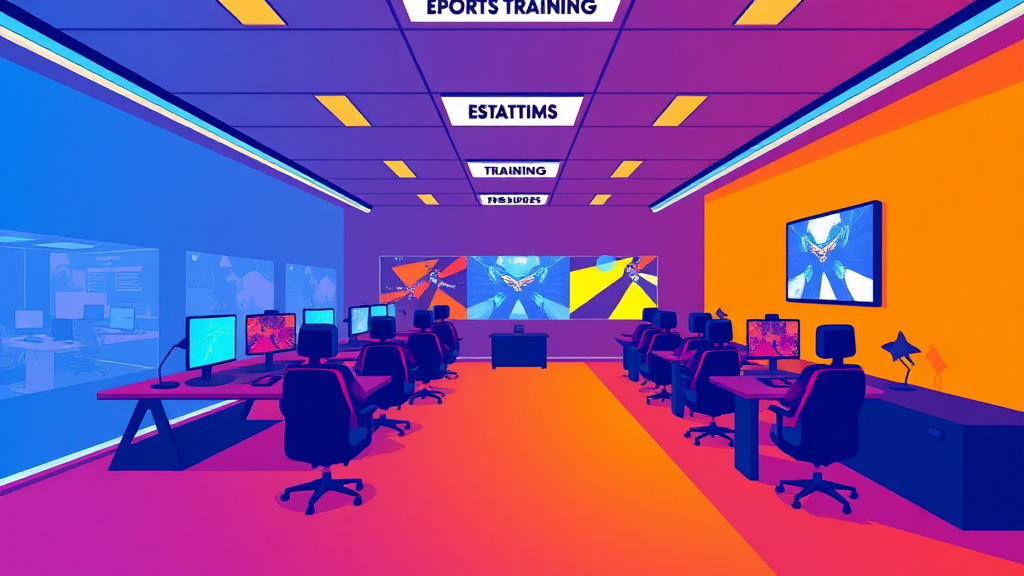
The esports industry has experienced a major shift, transitioning from basement competitions to a billion-dollar enterprise. Modern esports organizations are no longer scrappy underdogs—they’re professional organizations committing substantial resources to state-of-the-art training facilities, expert coaching teams, and performance science initiatives. This article explores the ways leading esports teams are mirroring conventional sports structures, analyzing the advanced facilities and professional guidance that separate championship-winning teams from competitors, and what this investment demonstrates about esports’ mainstream legitimacy.
The Development of Esports Infrastructure
The esports landscape has transformed dramatically over the previous decade, shifting from informal gaming sessions in basements to professionally structured organizations running world-class training facilities. Early esports teams functioned with limited resources, relying on players’ individual equipment and improvised training areas. Modern top-tier teams have poured billions toward purpose-built facilities including advanced gaming technology, high-speed internet infrastructure, and specially designed seating systems designed to optimize player performance and prevent injury during rigorous practice schedules.
This infrastructure transformation demonstrates the industry’s maturation and increasing competitiveness at the elite tier. Contemporary gaming venues now include elements adapted from traditional sports, featuring coaching facilities, performance science labs, and recuperation areas. Teams understand that physical training, mental health support, and nutrition planning influence gaming performance. The commitment to cutting-edge facilities has proven critical for signing premier athletes, as athletes increasingly seek elite-standard conditions matching those present in mainstream athletics, establishing infrastructure quality a distinguishing factor within premier organizations.
The professionalization of esports infrastructure extends beyond physical spaces to encompass detailed operational frameworks. Teams now hire dedicated coaching personnel comprising strategic analysts, mental performance coaches, and psychological experts together with conventional esports coaches. This cross-functional strategy understands that tournament achievement requires far more than mechanical skill, requiring tactical analysis, emotional resilience, and organizational harmony. The investment in human capital and professional competence has emerged as essential as facility development, establishing esports as a recognized professional industry.
Looking ahead, esports infrastructure continues to evolve with cutting-edge developments redefining training methodologies and athlete progression. Organizations are adopting machine learning insights, immersive simulation technology, and performance tracking devices to gain competitive advantages. These technological investments demonstrate esports teams’ focus on scientifically-grounded training practices, mirroring progress made in conventional athletics. As the industry matures, infrastructure standards will probably keep increasing, setting new benchmarks for what esports companies must deliver to maintain their edge at the top tier.
Modern Training Centers
Current professional gaming teams work out of specially designed practice spaces that rival conventional athletic teams in sophistication and investment. These specialized environments offer regulated settings tailored to competitive play, including climate control, properly designed equipment setups, and advanced networking infrastructure. Teams recognize that athletic and cognitive abilities significantly influence competitive results, resulting in significant financial investment on facilities that support player growth, recovery, and group unity throughout rigorous training schedules.
Gaming Hardware and Configuration
Esports professional organizations invest heavily in high-end gaming hardware, ensuring players have access to the most current equipment for optimal performance. High-refresh-rate monitors, mechanical keyboards, high-precision mice, and purpose-built gaming computers constitute major investments that directly influence performance edge. Teams meticulously calibrate equipment settings to match individual player preferences, understanding that hardware consistency and reliability are essential elements in maintaining peak performance during competitive tournaments and training sessions.
Beyond separate stations, teams set up specialized training facilities with multiple gaming stations arranged the same way to competitive settings. This uniform setup allows players to train under conditions aligned with tournament play, limiting uncertainties during competitions. Backup equipment and failover systems maintain unbroken training time, while technical support staff regularly check and service all equipment to avoid performance loss or sudden breakdowns.
- High-performance monitors delivering exceptional image quality
- Purpose-built gaming PCs with premium processors and graphics
- Precision gaming peripherals configured for competitive play
- Redundant networking systems ensuring reliable connection
- Studio-quality audio equipment for team communication
Expert Coaching and Support Teams
Professional gaming teams now utilize diverse coaching personnel matching traditional sports organizations. Head coaches create strategic play and team chemistry, while positional coaches focus on individual player development. Sports psychologists assist players handle stress and enhance psychological performance during competitive events. Analysts review gameplay footage, recognize opposing tactics, and provide data-driven insights. This comprehensive coaching model ensures players get full assistance across technical, tactical, and psychological dimensions.
The support systems goes past competitive coaching. Dietary specialists develop nutrition plans optimizing brain function and prolonged energy during tournaments. Strength coaches create conditioning programs tackling the physical demands of professional gaming, covering eye-hand coordination and cardiovascular conditioning. Sleep specialists advise on recovery methods essential for sustaining top-level play. Speaking coaches support competitors refine communication expertise and team cohesion. These expert positions jointly establish an ecosystem where esports athletes can reach peak performance.
Focus on Skills Enhancement
Leading esports organizations allocate significant resources in youth academies and talent pipelines, identifying promising players early and nurturing their development. Specialized coaching teams collaborate with junior teams, teaching fundamental skills and professional standards. Mentoring initiatives pair experienced professionals with emerging talents, facilitating knowledge transfer and accelerating growth. These investments secure future roster talent while building team culture and values that persist across player generations and competitive cycles.
Performance analytics track player metrics systematically, from reaction times to accuracy of decisions. Coaching staff utilize this data to determine strengths, weaknesses, and areas for improvement with measurable accuracy. Ongoing performance evaluations and customized training programs support sustained progress. Video breakdown sessions deconstruct successful and unsuccessful plays, enhancing player understanding of game mechanics. This analytics-based strategy converts subjective coaching into measurable and objective development strategies.
Financial Investment and Return on Success
The capital outlay required to maintain competitive esports teams has hit record highs. Major teams now spend millions each year in facility upgrades, coaching salaries, and athlete training systems. These considerable spending reflect the industry’s maturation and the competitive necessity to attract skilled players and facilities. Squads that neglect to match these investments stand to lose ground to competitors offering enhanced coaching settings and specialized instruction. The financial payoff manifests through tournament victories, brand agreements, and growing audience numbers that result from winning.
Tournament winnings and income sources demonstrate the tangible rewards of deliberate capital allocation in organizational systems. Championship victories translate directly into prize pools, sponsorship bonuses, and increased brand equity. Companies like T1 and FaZe Clan have generated hundreds of millions in income through successful esports operations. The correlation between infrastructure quality and tournament results is clear, with richly supported organizations consistently dominating major tournaments. This monetary achievement confirms the revenue framework, encouraging ongoing capital spending and drawing major funding to the competitive gaming industry.
Sponsorship possibilities have expanded significantly for groups possessing world-class facilities and proven track records. Brands recognize the commercial value of winning organizations with substantial online audiences and worldwide prominence. High-tier sponsorships secure six and seven-figure annual contracts, substantially reducing training facility costs. Additionally, player salaries and achievement incentives financed via sponsorship agreements allow organizations to attract world-class talent. This generates a self-reinforcing cycle where capital generates performance, winning brings investment, and sponsorship funds further investment.
The esports industry’s rapid expansion indicates that existing funding amounts will keep growing. Private equity investors and traditional sports organizations are steadily gaining stakes in competitive gaming organizations. This surge in funding accelerates infrastructure expansion and coaching personnel growth across the industry. As esports achieves mainstream acceptance and broadcast rights generate substantial revenue, investment returns on franchise stakes will probably grow substantially, cementing professional gaming as a credible competitive industry.
